| HOME| SCHOOLS | POSTS | FAQ | GLOBEGLUE | TOPICS | BOOKS | ABOUT
The simple, practical and collaborative way for people to think and work together, to solve problems and make better decisions.
What Is Brown Paper?
Brown Paper is a simple, practical and collaborative way for people to think together, solve problems and make better decisions. Using one large sheet of brown paper, participants share ideas, ask questions, challenge assumptions and agree priorities.Give a class a real problem and students often jump to a solution. Brown Paper teaches them to ask better questions, weigh evidence, decide together and explain why their plan deserves a try.Everyone can contribute through words, drawings, diagrams, sticky notes or discussion.The result is a shared understanding of the problem, practical actions and a One Page Plan that helps turn decisions into results.
This site provides practical guides and free resources to help people think critically, solve problems, work together and achieve worthwhile results.
Download: Brown Paper Overview
The Use of Brown Paper in Business
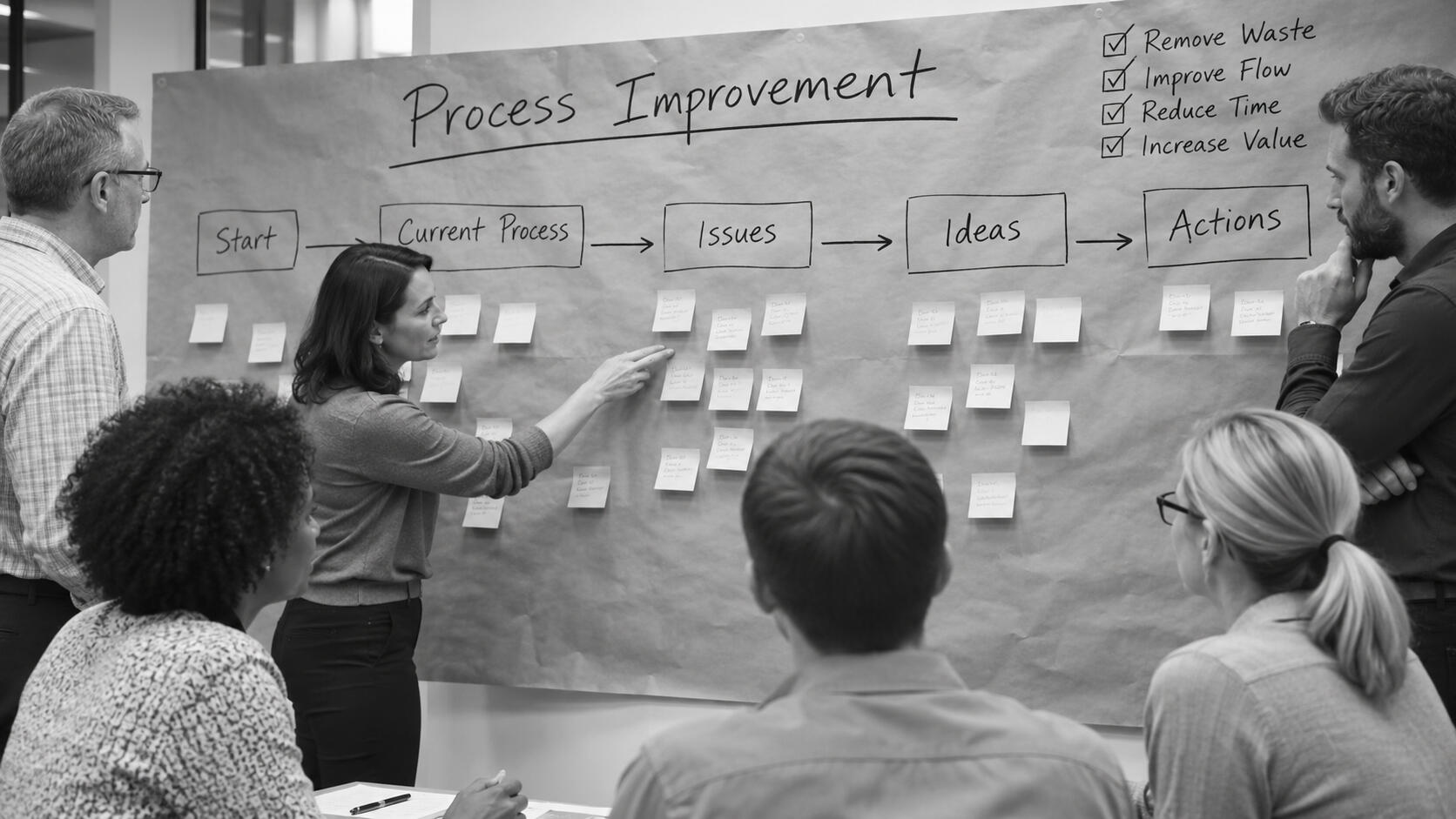
𝗕𝘂𝘀𝗶𝗻𝗲𝘀𝘀 𝗰𝗵𝗮𝗻𝗴𝗲𝗱 𝗵𝗼𝘄 𝗽𝗲𝗼𝗽𝗹𝗲 𝘄𝗼𝗿𝗸. 𝗖𝗮𝗻 𝗲𝗱𝘂𝗰𝗮𝘁𝗶𝗼𝗻 𝗰𝗵𝗮𝗻𝗴𝗲 𝗵𝗼𝘄 𝘀𝘁𝘂𝗱𝗲𝗻𝘁𝘀 𝘁𝗵𝗶𝗻𝗸? 𝗪𝗵𝘆 𝗮𝗿𝗲 𝘄𝗲 𝗽𝗿𝗲𝗽𝗮𝗿𝗶𝗻𝗴 𝘀𝘁𝘂𝗱𝗲𝗻𝘁𝘀 𝗳𝗼𝗿 𝗰𝗵𝗮𝗻𝗴𝗲 𝘄𝗶𝘁𝗵𝗼𝘂𝘁 𝗰𝗵𝗮𝗻𝗴𝗶𝗻𝗴 𝗵𝗼𝘄 𝘄𝗲 𝘁𝗲𝗮𝗰𝗵?𝗕𝗿𝗼𝘄𝗻 𝗣𝗮𝗽𝗲𝗿 𝗵𝗲𝗹𝗽𝗲𝗱 𝗼𝗿𝗴𝗮𝗻𝗶𝘀𝗮𝘁𝗶𝗼𝗻𝘀 𝗿𝗲𝘁𝗵𝗶𝗻𝗸 𝗵𝗼𝘄 𝘁𝗵𝗲𝘆 𝘄𝗼𝗿𝗸𝗲𝗱. 𝗖𝗼𝘂𝗹𝗱 𝗶𝘁 𝗵𝗲𝗹𝗽 𝗿𝗲𝘁𝗵𝗶𝗻𝗸 𝘁𝗲𝗮𝗰𝗵𝗶𝗻𝗴 𝗶𝗻 𝘁𝗵𝗲 𝗔𝗜 𝗮𝗴𝗲? The University of Cambridge describes Brown Paper as a method for examining business processes, identifying improvements and building shared understanding and ownership.The University of Strathclyde documents its use in Lean improvement projects to identify waste, bottlenecks and opportunities for change.𝗧𝗵𝗲 𝗰𝗼𝗺𝗺𝗼𝗻 𝗽𝗿𝗶𝗻𝗰𝗶𝗽𝗹𝗲? 𝗣𝗲𝗼𝗽𝗹𝗲 𝘄𝗼𝗿𝗸𝗶𝗻𝗴 𝘁𝗼𝗴𝗲𝘁𝗵𝗲𝗿 𝘁𝗼 𝗾𝘂𝗲𝘀𝘁𝗶𝗼𝗻, 𝘁𝗵𝗶𝗻𝗸 𝗮𝗻𝗱 𝗶𝗺𝗽𝗿𝗼𝘃𝗲.Organisations used Brown Paper to help employees question how work was done and take ownership of improvements. Now consider education. AI can produce answers in seconds. But students still need to question assumptions, examine evidence, solve problems and make independent judgements.My adaptation of Brown Paper applies these principles to education. Students use curriculum knowledge to investigate real challenges, work together and develop one shared plan.𝗪𝗵𝘆 𝘀𝗵𝗼𝘂𝗹𝗱𝗻'𝘁 𝘄𝗲 𝘂𝘀𝗲 𝘁𝗵𝗲 𝘀𝗮𝗺𝗲 𝗽𝗿𝗶𝗻𝗰𝗶𝗽𝗹𝗲𝘀 𝘁𝗼 𝗵𝗲𝗹𝗽 𝘀𝘁𝘂𝗱𝗲𝗻𝘁𝘀 𝗾𝘂𝗲𝘀𝘁𝗶𝗼𝗻 𝘄𝗵𝗮𝘁 𝘁𝗵𝗲𝘆 𝗹𝗲𝗮𝗿𝗻, 𝘀𝗼𝗹𝘃𝗲 𝗿𝗲𝗮𝗹 𝗽𝗿𝗼𝗯𝗹𝗲𝗺𝘀 𝗮𝗻𝗱 𝘁𝗮𝗸𝗲 𝗴𝗿𝗲𝗮𝘁𝗲𝗿 𝗼𝘄𝗻𝗲𝗿𝘀𝗵𝗶𝗽 𝗼𝗳 𝘁𝗵𝗲𝗶𝗿 𝘁𝗵𝗶𝗻𝗸𝗶𝗻𝗴?
Ten Reasons Why Brown Paper is Different
Brown Paper makes the people responsible for solving a problem work together to decide what must change, who will act and how they will know it worked.
1) It starts with questions.
Students ask what’s happening, who’s affected and what they still need to find out. One good question can change the problem they thought they were solving.
2) It makes connections visible.
An unused school garden might have poor access, few seats and no one to care for it. On one shared Brown Paper, students see how these conditions affect one another.
3) It makes critical thinking visible.
Students separate observations from assumptions, compare sources, question claims and explain what evidence would change their minds.
4) It gives creativity a purpose.
Students sketch alternatives and combine ideas within real limits. Could an overlooked corner become a growing space, a meeting place or a quiet area?
5) It makes collaboration count.
One student spots a detail, another asks a question that changes the plan. Observing, listening, drawing, organising and practical work can all shape the decision.
6) It builds decision making skills.
Students weigh likely benefits, effort and what’s realistic. They decide what they must, should and could do and explain their trade-offs.
7) It makes communication part of the work.
Students explain their reasoning, listen to objections and check understanding. The shared page helps them spot gaps, ask for clarification and build on ideas.
8) It turns decisions into a One Page Plan.
Students agree one goal, set priorities and show who will do what. Everyone can see how their contribution fits and what happens next.
9) It asks students to judge what has improved.
Can more people get into the garden? Do they want to spend time there? Students compare what happened with what they hoped to achieve.
10) It puts innovation into practice.
Students test an idea on a small scale and use the results to decide what to keep, change or drop. The first attempt informs the next.
Download: Brown Paper- Critical Thinking Questiona for Students
The Brown Paper Butterfly Effect

𝗜𝗳 𝗔𝗜 𝗰𝗮𝗻 𝗴𝗶𝘃𝗲 𝘀𝘁𝘂𝗱𝗲𝗻𝘁𝘀 𝘁𝗵𝗲 𝗮𝗻𝘀𝘄𝗲𝗿𝘀, 𝘄𝗵𝗼 𝗶𝘀 𝘁𝗲𝗮𝗰𝗵𝗶𝗻𝗴 𝘁𝗵𝗲𝗺 𝘁𝗼 𝗾𝘂𝗲𝘀𝘁𝗶𝗼𝗻 𝘁𝗵𝗼𝘀𝗲 𝗮𝗻𝘀𝘄𝗲𝗿𝘀?I really believe that education needs a few more butterflies. 𝗧𝗲𝗮𝗰𝗵𝗲𝗿𝘀 𝘄𝗶𝗹𝗹𝗶𝗻𝗴 𝘁𝗼 𝗺𝗮𝗸𝗲 𝘀𝗺𝗮𝗹𝗹 𝗰𝗵𝗮𝗻𝗴𝗲𝘀 𝘁𝗵𝗮𝘁 𝗰𝗼𝘂𝗹𝗱 𝗵𝗮𝘃𝗲 𝗺𝘂𝗰𝗵 𝘄𝗶𝗱𝗲𝗿 𝗲𝗳𝗳𝗲𝗰𝘁𝘀. Brown Paper offers one practical way to start.
- No new curriculum.
- No expensive technology.
- No major school improvement programme.Just an existing lesson, a meaningful challenge and a shared Brown Paper. Even a whiteboard will do, you don't even need the Brown Paper.Students use what they are learning
- to ask questions,
- challenge assumptions,
- examine evidence,
- discuss ideas,
- solve problems
- and make decisions together.𝗧𝗵𝗲 𝘁𝗲𝗮𝗰𝗵𝗲𝗿 𝗴𝘂𝗶𝗱𝗲𝘀 𝘁𝗵𝗲 𝗽𝗿𝗼𝗰𝗲𝘀𝘀. 𝗧𝗵𝗲 𝗰𝘂𝗿𝗿𝗶𝗰𝘂𝗹𝘂𝗺 𝗿𝗲𝗺𝗮𝗶𝗻𝘀 𝘁𝗵𝗲 𝗳𝗼𝘂𝗻𝗱𝗮𝘁𝗶𝗼𝗻.AI is making answers easier to obtain. That does not mean students are becoming better thinkers. Brown Paper gives students a reason to think for themselves, question answers and exercise independent judgement.And when one teacher demonstrates what is possible, other teachers may follow. Small changes can spread. 𝗔 𝘁𝗲𝗮𝗰𝗵𝗲𝗿 𝗱𝗼𝗲𝘀 𝗻𝗼𝘁 𝗵𝗮𝘃𝗲 𝘁𝗼 𝗰𝗵𝗮𝗻𝗴𝗲 𝘁𝗵𝗲 𝗲𝗱𝘂𝗰𝗮𝘁𝗶𝗼𝗻 𝘀𝘆𝘀𝘁𝗲𝗺 𝘁𝗼 𝗰𝗵𝗮𝗻𝗴𝗲 𝘄𝗵𝗮𝘁 𝗵𝗮𝗽𝗽𝗲𝗻𝘀 𝗶𝗻 𝘁𝗵𝗲𝗶𝗿 𝗰𝗹𝗮𝘀𝘀𝗿𝗼𝗼𝗺.𝗢𝗻𝗲 𝘁𝗲𝗮𝗰𝗵𝗲𝗿. 𝗢𝗻𝗲 𝗰𝗹𝗮𝘀𝘀. 𝗢𝗻𝗲 𝘀𝗺𝗮𝗹𝗹 𝗰𝗵𝗮𝗻𝗴𝗲.𝗕𝗿𝗼𝘄𝗻 𝗣𝗮𝗽𝗲𝗿 𝗕𝘂𝘁𝘁𝗲𝗿𝗳𝗹𝗶𝗲𝘀 𝗪𝗮𝗻𝘁𝗲𝗱. 𝗖𝗼𝘂𝗹𝗱 𝘆𝗼𝘂 𝗯𝗲 𝗼𝗻𝗲?
What is GlobeGlue?
- GlobeGlue brings people and communities together through worthwhile local activities.
- It encourages participation, connects people with shared interests and helps turn local ideas into practical action.
- By sharing community achievements, GlobeGlue inspires others to get involved, strengthen their communities and make a visible difference.
Brown Paper and GlobeGlue
Brown Paper and GlobeGlue are two complementary parts of the same community effort.
- Brown Paper helps local people identify a problem, understand its causes, agree what to do and take ownership of a practical One Page Plan.
- GlobeGlue brings community activities to people's attention, encourages participation and shares examples of what communities are achieving.
- GlobeGlue keeps people grounded in real communities, real people and problems they can see and care about.
- Brown Paper brings the discipline of thinking. It helps people understand the actual problem, question its causes, focus on what matters and agree practical actions that produce results.
- The One Page Plan turns those decisions into responsibilities, commitments and delivery.
Brown Paper helps communities turn their ideas into action. GlobeGlue helps those actions become visible, shared and potentially repeated elsewhere.
| HOME| SCHOOLS | POSTS | FAQ | GLOBEGLUE | TOPICS | BOOKS | ABOUT
| HOME| SCHOOLS | POSTS | FAQ | GLOBEGLUE | TOPICS | BOOKS | ABOUT
Brown Paper for Schools
Practical guides and curriculum-based Brown Paper publications for teachers, students and schools.
Getting Started
A practical introduction to Brown Paper that helps schools develop students’ critical thinking, judgement, problem-solving and teamwork through real community challenges. The guide explains how students, teachers and school leaders can work together to investigate problems, make decisions, create shared plans and achieve worthwhile results.
Critical Thinking Skills For Schools
𝗜𝗻 𝘁𝗵𝗲 𝗔𝗜 𝗮𝗴𝗲, 𝗮𝘀𝗸𝗶𝗻𝗴 𝗴𝗼𝗼𝗱 𝗾𝘂𝗲𝘀𝘁𝗶𝗼𝗻𝘀 𝗺𝗮𝘆 𝗯𝗲 𝗺𝗼𝗿𝗲 𝗶𝗺𝗽𝗼𝗿𝘁𝗮𝗻𝘁 𝘁𝗵𝗮𝗻 𝗸𝗻𝗼𝘄𝗶𝗻𝗴 𝘁𝗵𝗲 𝗮𝗻𝘀𝘄𝗲𝗿𝘀. AI can produce convincing answers in seconds. But a confident answer is not necessarily correct. It may contain errors, overlook evidence or make assumptions that nobody has questioned.
Brown Paper- Critical Thinking Questiona for Students
Facilitation and School Design
A bold proposal to rethink how schools prepare young people for the AI age, placing understanding, independent thinking, judgement and practical capability at the centre of education. Using Brown Paper collaboration and a One Page Plan, it presents ten areas for redesign, inviting educators, students and communities to challenge assumptions, test ideas and build a better school together.
If We Designed School Again Facilitation Guide
Example School Case Study
Riverside Secondary School: A Case Study in What Isn’t Working. A fictional secondary school case study that examines 67 challenges affecting student learning, behaviour, SEND, teachers, school organisation and the future of education. Using real educational evidence for context, it invites readers to question assumptions, identify connections and investigate underlying causes before deciding what needs to change.
Senior School Leaders
A practical guide showing school leaders how Brown Paper can help students develop thinking, judgement, problem-solving and teamwork while making worthwhile contributions to their communities. It explains how leaders can champion the approach, support teachers, provide the necessary resources and start with one manageable activity without adding unnecessary costs or workload.
Brown Paper for School Leaders
Headmasters' Challenges
A practical guide examining seven major challenges facing school leaders: student engagement, behaviour, curriculum, SEND and inclusion, teacher development, student leadership and AI readiness. It shows how Brown Paper can help schools question existing practices, investigate underlying problems and develop practical improvements that strengthen students’ independent thinking, judgement and ability to contribute.
Teachers
A practical, ten-lesson guide that helps teachers develop students’ questioning, critical thinking, judgement, problem-solving and teamwork. Using one shared Brown Paper, students investigate real challenges, exchange ideas, make decisions, take practical action and learn from results. Designed for use within existing lessons, with no prior training required.
A Brown Paper INSET Workshop
A practical, one-day professional development workshop that helps teachers work together to improve everyday teaching and working conditions across five areas: Behaviour & Engagement, AI & Technology, SEND & Inclusion, Instruction & Learning, and Collaboration & Continuous Improvement. Using one shared Brown Paper, teachers examine problems, challenge existing practices and develop five practical recommendations for a Teachers’ Charter, with school leaders responsible for reviewing proposals, explaining decisions and supporting agreed improvements.
KS2 Students
A practical, illustrated Brown Paper guide for children aged 8–11, helping them explore nature, develop ideas and work together to protect bees and butterflies. Through observation, drawing, group activities and one shared Brown Paper, children learn how to turn their ideas into practical action and make a positive contribution to their local environment.
Students
An easy-to-follow, illustrated guide that helps students develop questioning, critical thinking, problem-solving, teamwork and decision-making through practical challenges. Using examples from science, mathematics, English, geography and community activities, it shows students how to create a shared Brown Paper, investigate problems, agree actions and learn from the results.
Students Personal Development
Brown Paper: Becoming the Best Version of Myself. A practical personal development guide that helps young people understand their strengths and interests, build skills, make independent decisions, build positive relationships and look after their wellbeing. Using five Brown Paper focus areas, it provides questions, possible actions and personal outcomes to help them take responsibility for their development, explore new opportunities and prepare for the future.
Brown Paper for The Best Version of Myself
Getting a Job in the AI Age
A practical guide helping young people develop the capabilities employers value, including problem-solving, initiative, teamwork, independent judgement and delivering results. Using five Brown Paper focus areas, practical project examples and a personal Employment Evidence Pack, it shows how to build real achievements and demonstrate to employers what they can do, not simply what they know.
Brown Paper for STEAM Subjects
A practical Brown Paper guide helping teachers develop students’ critical thinking, questioning, problem-solving, teamwork and judgement through five challenges covering Science, Technology, Engineering, Arts and Mathematics. Each challenge uses five focus areas, group discussion and shared decisions to help students apply subject knowledge, agree practical actions and demonstrate how they think, not simply what they know.
Brown Paper for STEAM Subjects
Brown Paper for PULSE Subjects
A practical Brown Paper guide helping teachers develop students’ questioning, critical thinking, problem-solving, collaboration and judgement through five challenges covering Physical Education & Health, Understanding Civics, Languages & Literature, Social Studies & Geography, and Ethics & Life Skills. Students work in five groups to investigate questions, challenge assumptions, consider different viewpoints and agree practical actions on one shared Brown Paper. The focus is on developing independent thinking and decision-making through existing subjects, not adding more lessons or examinations.
Brown Paper for PULSE Subjects
Brown Paper: A Guide to Planning and Running a Classroom Challenge
An illustrated, step-by-step guide showing teachers how to introduce Brown Paper into existing subjects without replacing normal teaching or adding unnecessary workload. Through seven practical steps, a suggested two-lesson timetable, teacher notes, checklists and a Focus Area template, it explains how students can investigate challenges, work in five groups, agree priorities and create one shared Brown Paper plan that develops understanding, critical thinking, teamwork and judgement.
General Brown Paper Preparation for Series 2 Lessons
Brown Paper for History
A practical Brown Paper guide helping teachers turn historical knowledge into deeper understanding through five challenges: the Black Death, the fall of the Western Roman Empire, the Aztec encounter with Cortés, the Irish Potato Famine and the Cuban Missile Crisis. Students build on teacher-led lessons and Backgrounders, then work in five groups to investigate connected problems, examine historical evidence, question interpretations and agree practical actions using the knowledge and resources available at the time. Each challenge brings the groups' findings together on one shared Brown Paper, developing historical understanding, independent thinking, collaboration and informed judgement. The guide complements existing History teaching rather than replacing it.
Brown Paper for Geography
A practical Brown Paper guide helping teachers turn geographical knowledge into deeper understanding through five real challenges: Montserrat, Chernobyl, Kishangarh, the Amazon rainforest and Cape Town. Students build on teacher-led lessons and Backgrounders, then work in five groups to investigate connected problems, examine geographical evidence, question assumptions and agree practical actions using the knowledge and resources available at the time. Each group prioritises MUST DO, SHOULD DO and COULD DO actions, with five MUST DO actions forming one shared Brown Paper plan. The guide develops geographical understanding, independent thinking, collaboration and informed judgement while complementing existing Geography teaching rather than replacing it.
Brown Paper for English Literature
A practical Brown Paper guide helping teachers turn literary knowledge into deeper understanding through Daniel Defoe’s Robinson Crusoe. Students explore the novel’s characters, themes and historical setting before tackling one shared challenge: Could we make better decisions than Robinson Crusoe? Working across five Focus Areas — Shelter & Safety, Food & Survival, Tools & Resources, Isolation & Faith, and Friendship, Teamwork & Rescue — students examine literary evidence, question Crusoe’s judgement and consider alternative decisions. Across three lessons, each group agrees one literary finding and three MUST DO, SHOULD DO and COULD DO actions. The class then selects five priorities to create one shared Island Survival Plan. The guide develops critical reading, independent thinking, collaboration and informed judgement while complementing existing English Literature teaching rather than replacing it.
Brown Paper for English Literature - Robinson Crusoe
Challenge the AI
A practical learning challenge where students investigate an AI-designed drone delivery system, question its claims and use technical evidence to decide what works and what needs to change. Working in five groups, students examine 15 components, make ACCEPT, CHANGE or REJECT decisions and combine their findings into one shared Brown Paper, developing critical thinking, problem-solving, teamwork and independent judgement in the AI age.
Brown Paper for AI STEAM - Drone Delivery System Overview
Brown Paper - A Similar Approach as AI
Brown Paper for AI Integration in Schools
Brown Paper for SEND
A practical Brown Paper guide helping schools, families and communities imagine and design an environment in which SEND individuals can develop their capabilities, make meaningful choices, participate in society and enjoy fulfilling lives. The guide introduces the Ideal SEND Signal Box, with 25 adjustable levers covering learning, health, communication, relationships, community participation, family support and future opportunities. Six connected Focus Areas bring these conditions together, including a dedicated focus on the SEND Individual Experience. Through practical challenges and activities, readers examine existing provision, identify barriers, listen to young people and agree what needs to change. Using Must Do, Should Do and Could Do priorities, they turn their findings into one shared Brown Paper and a practical One Page Plan. The central principle is simple: the environment adapts to the individual, not the individual to the environment.
SEND 25 - A Practical Brown Paper Guide for SEND in Schools
A Capability CV for a SEND Individual
| HOME| SCHOOLS | POSTS | FAQ | GLOBEGLUE | TOPICS | BOOKS | ABOUT
| HOME| SCHOOLS | POSTS | FAQ | GLOBEGLUE | TOPICS | BOOKS | ABOUT

25 School Community Activities Around the World
25 School Activities Around the World brings together 25 inspiring examples of students making a positive difference in their communities. From helping younger children and supporting older people to improving local environments, the guide shows how real community projects can be adapted using Brown Paper. Each activity provides a practical opportunity for students to develop critical thinking, problem-solving, judgement, teamwork and confidence while making a meaningful contribution to their community. Real examples. Practical activities. Skills for life.
The aim is simple:support students to help communities with common problems and start working together to solve them.
Free Download: 25 School Community Activities Around the World
Rebuilding Our Communities
Rebuilding Our Communities is a free, practical guide to tackling the problems affecting our communities, from crime, poverty and homelessness to unemployment and social isolation. It combines the magic of Brown Paper with the power of focus, bringing people together to question assumptions, identify what matters most, agree priorities and take practical action. One shared goal. Five focus areas. Clear actions. Measurable results.
The aim is simple: help communities stop talking about problems and start working together to solve them. Free Download: Rebuilding Our Communities
| HOME| SCHOOLS | POSTS | FAQ | GLOBEGLUE | TOPICS | BOOKS | ABOUT
| HOME| SCHOOLS | POSTS | FAQ | GLOBEGLUE | TOPICS | BOOKS | ABOUT

Brown Paper Posts
School Posts
Bring English Literature Alive with Brown Paper
Is Brown Paper Another One for the Cupboard?
Can Students Explain a Geograhical Disaster?
Could Brown Paper for Schools Offer a New Opportunity for Education Consultants?
Does your School Have an AI Education Plan?
Present Any Subject from the Curriculum using Brown Paper
Bring History Alive With Brown Paper
An Easy Way to Develop Critical Thinking in Schools
Using Brown Paper for INSET Days
Using Brown Paper to Spot The Truth
Thinking, Judgment and Problem Solving Using Brown Paper
Topic Posts
| HOME| SCHOOLS | POSTS | FAQ | GLOBEGLUE | TOPICS | BOOKS | ABOUT
| HOME| SCHOOLS | POSTS | FAQ | GLOBEGLUE | TOPICS | BOOKS | ABOUT

About Ken Martin
After many years working as a senior leader, management consultant and project manager, leading teams and delivering business transformation, I recognised the potential of the simple Brown Paper approach.I saw how bringing people together around one clear goal, focusing their thinking on what matters most and encouraging everyone to contribute could create genuine ownership and deliver worthwhile results.I have since developed Brown Paper into a practical, accessible approach that individuals, groups and organisations can use to think better, work together, make better decisions and turn ideas into action.My aim is simple: to share what I have learned and help others achieve worthwhile results for themselves and their communities.
| HOME| SCHOOLS | POSTS | FAQ | GLOBEGLUE | TOPICS | BOOKS | ABOUT
| HOME| SCHOOLS | POSTS | FAQ | GLOBEGLUE | TOPICS | BOOKS | ABOUT
Books Available on Amazon
Based on the Brown Paper approach, each book identifies the key factors for success, explores practical actions and brings everything together in a clear One Page Plan. Written for business leaders, managers and professionals, the books help turn complex challenges into understandable, manageable plans that people can use to achieve measurable results.
1. Learning, Thinking and Problem Solving Guides
AI can produce convincing answers in seconds. But a confident answer is not necessarily correct. It may contain errors, overlook evidence or make assumptions that nobody has questioned.
- A Simple Guide to AI for Students
- The SImple Guide to Learning Better
- The Simple Guide to Problem Solving
- The Simple Critical Thinking Guide
2. One Page: Practical Guides to Planning & Delivering Success
The One Page Enterprise books provide practical guidance for tackling complex business challenges through clear thinking, collaborative planning and effective decision-making.
- The Organizational Change Management Comms Playbook
- The Strategy Planning and Execution Playbook
- The Program Management Playbook
- The Project Portfolio Management Playbook
- The ERP Planning and Implementation Playbook
- The Digital Transformation Playbook
- The Transformational CTO Playbook
- The Operational Excellence Playbook
- The Supply Chain Management Playbook
- The Environmental, Social & Governance Playbook
- The CIO AI Application Strategy Playbook
3 One Page Workshops: Guides to Collaborative Planning and Results
The One Page Enterprise Workshop books provide practical guidance for bringing people together to tackle business challenges, solve problems and agree on priorities.
- ESG Excellence in Oil and Gas
- Digital Excellence in Healthcare
- Organisational Change Excellence
- AI Excellence in Organisations
4. One Page Industry Guides: Guides to Business Transformation
The One Page Industry books provide practical guidance for tackling major business challenges and improving performance across different industries.
- Telecom Services Transformation
- Healthcare Services Transformation
- Energy Services Transformation
- Financial Services Transformation
| HOME| SCHOOLS | POSTS | FAQ | GLOBEGLUE | TOPICS | BOOKS | ABOUT
| HOME| SCHOOLS | POSTS | FAQ | GLOBEGLUE | TOPICS | BOOKS | ABOUT

Frequently Asked Questions
1. Why does education need Brown Paper when schools already teach critical thinking and problem-solving?
Schools already develop these capabilities, but opportunities vary. Brown Paper provides a structured way for students to investigate challenges, question evidence, consider alternatives and make decisions together. It builds on existing teaching rather than adding another curriculum subject.
2. What is Brown Paper, and how does it differ from existing teaching methods, including project-based learning?
Brown Paper uses one shared goal, five connected Focus Areas and a visible collaborative workspace. Students investigate, question, prioritise and develop a One Page Plan. It shares features with project-based learning but combines visible contributions, connected thinking, shared decisions and ownership of the resulting plan.
3. What research supports Brown Paper, and what evidence is still needed?
Research supports structured collaboration, metacognition and questioning, including findings published by the Education Endowment Foundation (EEF). This provides a research foundation for Brown Paper's approach, but not direct proof of its effectiveness. Independent classroom trials and assessments of individual learning are still needed.
4. How does Brown Paper build on curriculum knowledge rather than replace it?
Curriculum knowledge provides the foundation. Brown Paper helps students apply it through investigation, questioning and judgement. For example, students studying the Black Death can examine its causes, spread and consequences using historical evidence. Teachers continue to teach subject knowledge and correct misconceptions.
5. How does Brown Paper develop questioning, critical thinking, problem-solving and independent judgement?
Students distinguish facts from assumptions, examine evidence, challenge explanations and compare alternatives. Their thinking becomes visible on one shared Brown Paper, where ideas can be questioned and improved. Students then justify their priorities and decisions through a One Page Plan.
6. Can students apply the thinking and problem-solving skills they develop through Brown Paper to other subjects and real-life situations?
That is an intended benefit, not an automatic outcome. Brown Paper provides a consistent process for investigating challenges across subjects, but students still need relevant knowledge and guidance. Teachers can encourage transfer through repeated practice, reflection and new challenges that test independent application.
7. What is the teacher's role, and how much preparation, training and classroom time does Brown Paper require?
Teachers select a suitable challenge, prepare relevant subject knowledge and evidence, guide questioning and challenge misconceptions. The introductory guide provides seven steps, a suggested two-lesson timetable and practical templates. More complex challenges take longer. Brown Paper aims to use existing classroom time differently, not add another programme.
8. How does Brown Paper enable every student, including those with SEND, to make a meaningful contribution?
Students can contribute through speaking, writing, drawings, notes, sketches, research, questioning or practical activities. These contributions can be added directly to the shared Brown Paper. Teachers adapt communication, tasks and support so students with different needs can participate and influence group decisions. One shared goal allows different ways of thinking and contributing.
9. How can teachers assess individual learning rather than simply the completion of a group activity?
A completed Brown Paper shows group output, not individual learning. Teachers assess students through questioning, observation, explanations and reflection. Students should demonstrate what they understood, what evidence influenced their thinking and why they made particular decisions.
10. How does Brown Paper prepare students to question and use AI rather than depend on its answers?
Students learn to examine AI-generated information, challenge assumptions and justify decisions. In Challenge the AI, students evaluate an AI drone delivery proposal through 15 ACCEPT, CHANGE or REJECT decisions. The aim is informed judgement, not automatic acceptance or rejection of AI.
11. What are Brown Paper's limitations, and when might another teaching approach be more appropriate?
Brown Paper cannot replace direct instruction, individual practice or specialist support. Students need sufficient knowledge to investigate challenges meaningfully. It adds most value when students must examine evidence, consider alternatives, collaborate and make decisions. Not every lesson requires Brown Paper.
12. How can a school test Brown Paper, assess its value and decide what to do next?
Start with one curriculum-linked challenge and a manageable student group. Agree what students should demonstrate before starting, then assess individual knowledge, questioning, reasoning and participation before and after the activity. Gather feedback, compare results with existing teaching where possible, and expand only when evidence supports it.
| HOME| SCHOOLS | POSTS | FAQ | GLOBEGLUE | TOPICS | BOOKS | ABOUT